Conveyorised Metal Detector
Food safety has become one of the most important priorities for manufacturers, processors, and packaging companies. During food production, products can accidentally come into contact with unwanted metallic contaminants from raw materials, processing equipment, maintenance activities, or packaging operations.
To identify and remove such contamination before products reach customers, industries use advanced inspection systems such as a conveyorised metal detector.
A conveyorised metal detector provides continuous inspection of products moving on a conveyor belt. It helps food manufacturers detect metallic contaminants and maintain quality standards throughout the production process.
SMMS Engineering Systems provides industrial metal detection solutions designed for different industries, including food, FMCG, pharmaceutical, healthcare, rubber, agro products, FIBC, and other manufacturing applications.
What Is a Conveyorised Metal Detector?
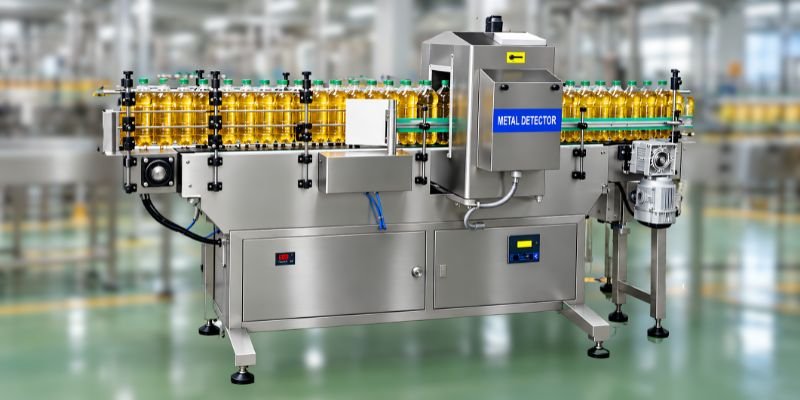
A conveyorised metal detector is an automated inspection system installed on a conveyor line to detect metallic contaminants present inside or on the surface of products.
The system consists of:
- Metal detector head
- Conveyor belt system
- Control panel
- Product detection sensors
- Rejection mechanism
- Support structure
Products pass through the detection area while the system checks for the presence of metallic particles.
When unwanted metal contamination is detected, the system can activate a rejection mechanism to remove the affected product from the production line.
Why Are Conveyorised Metal Detectors Used in Food Industries?
Food processing involves multiple stages, including:
- Raw material handling
- Mixing
- Processing
- Cutting
- Filling
- Packaging
- Transportation
During these stages, metal contamination may occur due to:
- Machinery wear
- Broken equipment components
- Maintenance activities
- Raw material contamination
- Packaging-related issues
A conveyorised metal detector helps manufacturers identify these risks before the product reaches consumers.
Importance of Metal Detection in Food Manufacturing
1. Food Safety Protection
Metal contamination can affect product safety and customer confidence.
Metal detection systems help manufacturers identify contaminated products before distribution.
2. Quality Control Improvement
Automated inspection provides an additional quality-control step within the production process.
3. Compliance Support
Many food manufacturers follow strict quality-management systems that require contamination control procedures.
Metal detection can become an important part of these inspection processes.
4. Reduced Product Recalls
Identifying contamination during production can help reduce the risk of defective products reaching the market.
5. Brand Protection
Consistent quality-control practices help manufacturers maintain customer trust.
How Does a Conveyorised Metal Detector Work?
A conveyor metal detector operates through a continuous inspection process.
1. Product Movement Through Conveyor
Products move through the detection area on a conveyor belt.
The conveyor system maintains controlled product movement to allow effective inspection.
2. Metal Detection Process
The detector head generates an electromagnetic field.
When a metallic object passes through this field, the system identifies changes caused by the metal contamination.
3. Signal Processing
The control system analyses the detected signal and determines whether metallic contamination is present.
Advanced systems are designed to differentiate between acceptable product conditions and contamination signals.
4. Product Rejection
If metal contamination is detected, the rejection mechanism removes the affected product according to the production setup.
Different rejection methods can be selected depending on:
- Product type
- Conveyor speed
- Packaging format
- Production requirements
Types of Metal Contaminants Detected
A conveyorised metal detector can help identify different types of metallic contamination, including:
Ferrous Metals
Examples include:
- Iron
- Steel particles
- Machinery wear fragments
Non-Ferrous Metals
Examples include:
- Copper
- Brass
- Aluminium
Stainless Steel
Stainless steel detection is particularly important because it can originate from food-processing equipment.
The detection capability depends on the system design, product characteristics, operating conditions, and application requirements.
Applications of Conveyorised Metal Detectors
Conveyorised metal detectors are widely used in industries where products move through continuous production lines.
Food Processing Industry
Food manufacturers use metal detectors for products such as:
- Snacks
- Biscuits
- Bakery products
- Frozen foods
- Packaged foods
- Dairy products
- Meat products
- Spices
- Grains
The exact application depends on product characteristics and production requirements.
FMCG Industry
Fast-moving consumer goods manufacturers use inspection systems to maintain product quality during high-volume production.
Applications may include:
- Packaged consumer products
- Personal care products
- Household products
- Processed goods
Pharmaceutical Industry
Pharmaceutical manufacturers require strict contamination-control processes.
Metal detection systems may be used for suitable products and production stages.
Agro Products Industry
Agricultural processing facilities may use metal detection systems to inspect processed agricultural products before packaging.
Rubber and Industrial Products
Metal detection can also be used in industrial manufacturing processes where metal contamination needs to be identified.
Key Benefits of Conveyorised Metal Detectors
Continuous Product Inspection
The system allows products to be inspected automatically while moving through the production line.
Improved Production Efficiency
Automated inspection reduces dependence on manual checking processes.
Fast Contamination Detection
Metal contamination can be identified during production instead of after distribution.
Integration With Existing Lines
Conveyorised systems can be designed to work with existing production setups.
Better Quality Management
Metal detection provides an additional control point in manufacturing operations.
Factors to Consider Before Selecting a Conveyorised Metal Detector
Selecting the correct metal detector depends on the product and production environment.
1. Product Type
Different products affect detection performance differently.
Important considerations include:
- Dry products
- Wet products
- Frozen products
- Packaged products
- Bulk materials
2. Product Size and Shape
The size, shape, and packaging of the product influence detector selection.
3. Conveyor Speed
Production line speed should be considered when selecting the detection system.
The metal detector should be suitable for the required production rate.
4. Detection Requirements
Manufacturers should define:
- Type of metal contamination risk
- Required sensitivity
- Product inspection point
- Rejection method
5. Production Environment
The operating environment should also be evaluated.
Consider:
- Dust levels
- Moisture exposure
- Cleaning requirements
- Temperature conditions
- Space availability
6. Conveyor Configuration
The conveyor design should match:
- Product dimensions
- Product weight
- Production layout
- Transfer requirements
Conveyorised Metal Detector vs Manual Metal Inspection
| Factor | Conveyorised Metal Detector | Manual Inspection |
|---|---|---|
| Inspection method | Automated | Operator-dependent |
| Production speed | Suitable for continuous production | Limited by manual checking |
| Consistency | Standardized detection process | Depends on operator |
| Integration | Can connect with production lines | Requires separate checking |
| Product handling | Automated movement | Manual handling required |
For high-volume manufacturing environments, automated metal detection provides a structured inspection approach.
Importance of Metal Detection in HACCP-Based Food Safety Systems
Many food manufacturers implement preventive quality-control systems to manage contamination risks.
Metal detection can serve as one of the control measures within a broader food-safety process.
However, the complete safety system depends on multiple factors, including:
- Raw material control
- Manufacturing practices
- Equipment maintenance
- Hygiene procedures
- Inspection systems
- Quality management processes
Maintenance of Conveyorised Metal Detectors
Regular maintenance helps maintain reliable operation.
Maintenance activities may include:
- Cleaning the conveyor system
- Checking sensors
- Inspecting mechanical components
- Verifying rejection operation
- Testing system performance
- Following manufacturer guidelines
The maintenance schedule depends on the equipment design and operating environment.
Choosing a Conveyorised Metal Detector Manufacturer
When selecting a metal detection system supplier, manufacturers should consider:
Industry Experience
A supplier with experience across different industries can better understand application requirements.
Product Range
Different applications may require different metal detection configurations.
Technical Support
Installation guidance, testing support, and after-sales service are important considerations.
Customization Options
Production lines may require customized conveyor dimensions, rejection mechanisms, or integration solutions.
Conveyorised Metal Detector Solutions by SMMS
SMMS Engineering Systems provides metal detection solutions for industrial applications, including conveyor-based metal detection systems.
The company offers metal detectors designed for industries such as food, FMCG, pharmaceutical, healthcare, rubber, agro products, FIBC, and other manufacturing sectors.
For selecting a conveyorised metal detector, manufacturers should evaluate their product type, production speed, contamination risks, conveyor requirements, and quality-control objectives.
Frequently Asked Questions
1. What is a conveyorised metal detector?
A conveyorised metal detector is an automated inspection system installed on a conveyor line to detect metallic contaminants in moving products.
2. Where are conveyor metal detectors used?
They are commonly used in food processing, FMCG, pharmaceutical, agro, rubber, and industrial manufacturing applications.
3. What metals can a conveyorised metal detector detect?
Depending on the system and application, metal detectors can identify ferrous, non-ferrous, and stainless-steel contamination.
4. Why are metal detectors important in food industries?
They help identify metallic contamination and support food quality-control processes.
5. Can conveyorised metal detectors be integrated into existing production lines?
Yes, conveyor metal detectors can be configured according to production layouts and inspection requirements.
6. How do I choose a conveyorised metal detector?
Selection depends on product type, conveyor speed, packaging, contamination risks, production environment, and required detection performance.